How to turn your best customers into brand ambassadors
 Social Place · 6 min read
On this page
Your best ambassadors are probably not influencers. They’re customers who already recommend you to a friend, tag you in their photos and answer questions about your products before you do. Here’s how to find them, give them a real place in your brand and make sharing easy, without turning them into paid advertisers.
To keep it concrete, we follow one example: a small brand of yoga mats, blocks and straps, with a few hundred loyal customers and a Shopify store.
Ambassador or influencer?
The two are often confused, but they don’t work the same way:
| Criterion | Paid influencer | Customer ambassador |
|---|---|---|
| Why they talk about you | A fee or gifted products | They use your products and like them |
| Who listens | A large audience, often far from your niche | Friends, family, a class, a club: people who trust them |
| How long it lasts | One campaign | As long as they feel part of the brand |
| What it costs you | A budget per post | Attention, recognition and a few perks |
Influencers can bring reach. Ambassadors bring trust, and trust is what turns a recommendation into an order. A small store can afford the second one.
Step 1: Find the customers who already talk about you
Don’t recruit with a form on your homepage. Look for the people already doing the work:
- Repeat buyers, especially those who buy gifts: they recommend you without being asked.
- Customers who tag you on Instagram or post photos of your products.
- Detailed reviewers: a review that tells a story comes from someone who cares.
- Helpful members who answer other customers’ questions in your community.
- Sharers: in Social Place, the Analytics page shows your most shared posts, and the members who shared their links.
Social Place can also badge some of them automatically: your most active members and your top buyers. For our yoga brand, the shortlist came to eight people, including two yoga teachers who sent their students to the store every term.
Step 2: Ask them personally
An invitation should feel like a thank-you, not like a contract. Write to each person, by name, and say why you thought of them:
Hi [first name], it’s [your first name] from [your store name]. We noticed you’ve answered a lot of questions about our mats in the forum, and your photos from the beach session made our week. We’d love you to be one of our first ambassadors: you’d test new products before anyone else and help us choose some of them. Nothing to post, no quota. Interested?
Make it clear there’s no obligation. Ambassadors who don’t feel obliged talk about you more, and more sincerely.
Step 3: Give them a visible place
Recognition is the heart of an ambassador program, and it should be visible to everyone:
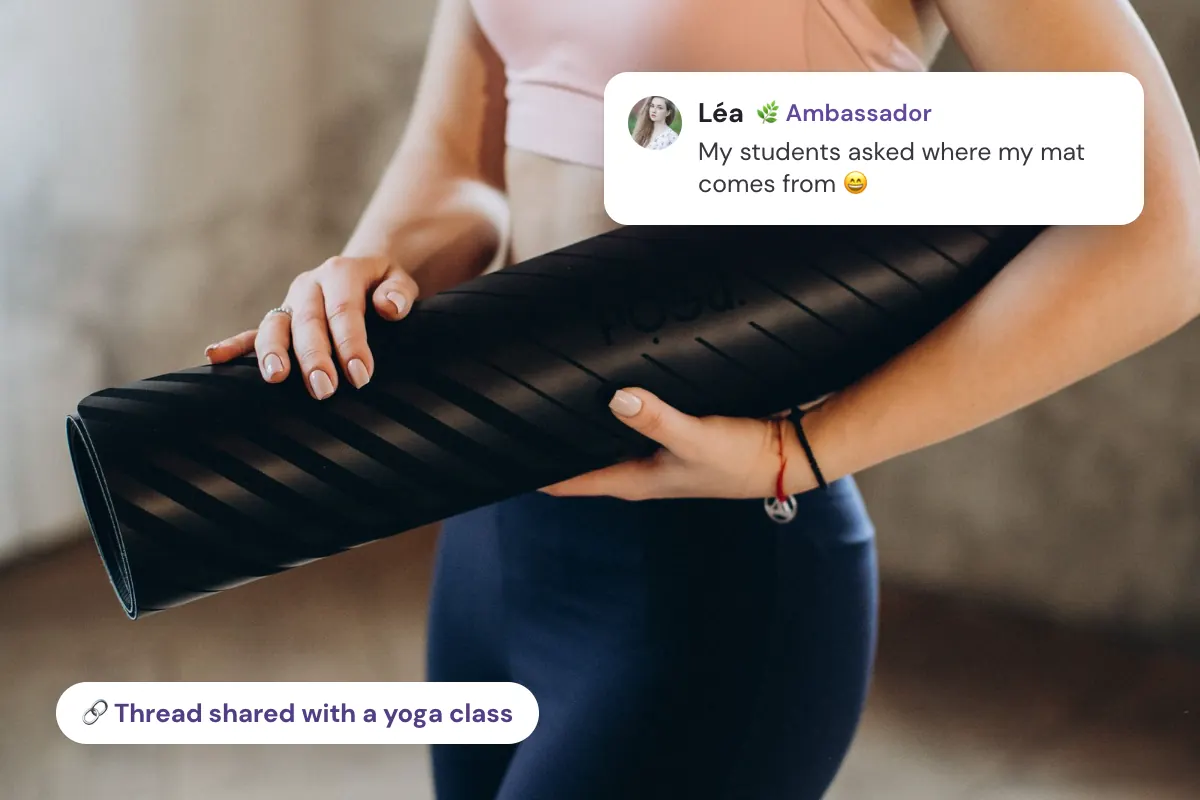
- A badge next to their name. In Social Place, create a custom badge such as 🌿 Ambassador and assign it from the member’s page: it shows in every post and comment.
- Their own space. A category reserved for ambassadors, where you share prototypes and ask for their opinion before anyone else.
- A name in public. Introduce each new ambassador in a post: who they are, how they use your products, why you asked them.
Badges and levels work for all your members too. See how to reward customers with points, levels and badges.
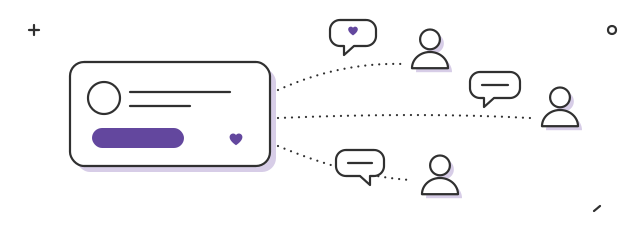
- An ambassadora customer with a badge
- The people who trust themfriends, a class, a club
Step 4: Give them something worth sharing
Ambassadors talk about you when they have something new to say. Give them reasons:
- Early access. The new mat color a week before the launch, so they’re the first to show it. See how to launch a new product with your community.
- Prototypes to test, with a real say: if three ambassadors find the strap too short, change it, and tell them.
- Behind the scenes: the factory visit, the samples that didn’t make it, the next collection on the drawing board.
- A code for their friends, created in Shopify, so a recommendation comes with a small welcome gift.
Step 5: Make sharing easy, not scripted
Ready-made captions sound like ads, and their friends can tell. Give ambassadors material, not scripts:
- Photos and short videos they can use freely.
- Links to threads rather than to your homepage: a discussion about “which mat for hot yoga?” is a better thing to share than a product page.
- The real story behind each product, in a few lines, so they can tell it in their own words.
One rule to share with them: if they receive products or a code, they should say so when they talk about you. In many countries, including the United States and the European Union, hiding a commercial relationship with a brand is against consumer protection rules, and it’s also the fastest way to lose trust.

- A thread worth sharingphotos and real answers
- Shared in their own wordswith their friends
Step 6: Thank them in public, again and again
An ambassador program dies when the brand forgets its ambassadors after the welcome post. Keep the relationship alive:
- React and reply to every post they write, the same day.
- Feature their photos with their first name and their consent: in the forum, in your newsletter, on your product pages. See how to get customers to share photos of your products.
- Send a personal thank-you now and then: a handwritten note in a parcel, a personal discount code, a first look at a product.
Avoid paying per post. It turns a recommendation into a transaction, and the people who listen to your ambassadors will feel the difference.
Mistakes to avoid
- Recruiting too many at once. Five ambassadors you know by name are worth more than fifty you never talk to.
- Asking for a quota of posts. Obligation kills sincerity.
- Choosing by follower count. A yoga teacher whose thirty students follow their advice beats an account with ten thousand followers who don’t know your niche.
- Hiding the relationship. Gifts and codes must be disclosed, every time.
Ambassadors grow out of a living community: the customers who answer questions and post photos today are your ambassadors of tomorrow. If you’re starting from scratch, begin with how to build an online community for your Shopify store. Their reviews and answers also help you on Google, as we explain in how customer content helps your Shopify store rank on Google.
FAQ
What is a brand ambassador?
A customer who uses your products, likes them and recommends them to the people around them. Unlike a paid influencer, they talk about you because they want to, to people who already trust them.
How do I find brand ambassadors for my Shopify store?
Look at the customers already doing the work: repeat buyers, customers who tag you on Instagram, detailed reviewers and the members who answer other customers’ questions in your community.
Should I pay my ambassadors?
Avoid paying per post: it turns a recommendation into a transaction. Give recognition, early access, prototypes to test and now and then a personal discount code instead.
Do ambassadors have to disclose gifts or codes?
Yes. If they receive products or a code, they should say so when they talk about you. Hiding a commercial relationship is against consumer protection rules in many countries.
How many ambassadors should I start with?
Five to ten people you know by name. It’s better to stay in touch with a few than to forget fifty.