 Social Place
How to reward customers with points, levels and badges
Most loyalty programs reward one thing: spending. A community lets you reward what makes customers come back too: a helpful answer, a photo of their latest project, a question that gets everyone talking. Here’s how to set up points, levels and badges that reward taking part, without giving away your margin.
To keep it concrete, we follow one example: a small yarn shop that sells wool, needles and its own knitting patterns.
Loyalty program or community rewards?
A classic Shopify loyalty program counts orders. It works, but it only speaks to customers when they’re about to buy. Community rewards count what happens between two orders as well.
| Criteria | Classic loyalty program | Community rewards |
|---|---|---|
| What earns points | Purchases | Posts, comments and purchases |
| What customers get | Discounts | Discounts, plus badges, access and visibility |
| Where it shows | On an account page | Next to their name, in every post |
| What it builds | Repeat orders | Repeat visits, conversations and orders |
The two don’t compete. Purchases still earn points, so your best customers keep climbing. Taking part simply adds a second way to get there.
What should earn points
Reward the actions you want to see more of. In a community, that means starting conversations, keeping them going and coming back to order. Here’s an example of a scale, to adapt to your shop:
| Action | Example | Why |
|---|---|---|
| A post | 10 points | It starts a conversation, often with a photo |
| A comment | 3 points | It keeps the conversation going |
| A purchase | 1 point per dollar spent | Your best customers keep their head start |
Two things to keep in mind when you set the numbers:
- A post is worth more than a comment. If comments earn as much as posts, some members will post “Nice!” everywhere to climb. Keep comments cheap.
- Purchases shouldn’t drown everything else. If one big order is worth more than a month of helpful answers, taking part stops mattering. Check that an active member who buys a little can still move up.
Posts with photos are the ones that make a forum feel alive. If you want more of them, read how to get customers to share photos.
Name your levels in your brand’s voice
“Bronze, Silver, Gold” could be any shop. Levels named after your world give members something to talk about. Our yarn shop named them after knitting stitches, from the easiest to the hardest:
| Level | Points | Reward |
|---|---|---|
| 🧶 First Stitch | 30 | A badge next to their name |
| 🪡 Stockinette | 250 | A 10% discount code |
| 🏅 Cable Knit | 800 | 15% off and access to a private “Pattern testers” category |
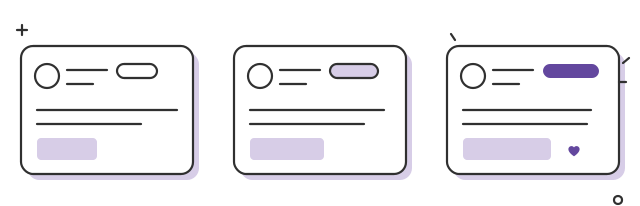
- 🧶 First Stitch30 points
- 🪡 Stockinette250 points
- 🏅 Cable Knit800 points
Three rules for the ladder:
- Make the first level easy. One post and a few comments should be enough. A new member who gets a badge in their first week understands the system right away.
- Space the next ones out. The middle level should take a few weeks of regular activity, and the top level a few months.
- Start with three to five levels. You can add one later, when many members are waiting at the top.
Badges: recognition counts as much as the discount
A discount is used once and forgotten. A badge stays next to the member’s name in every post and every comment, where everyone can see it. For many regulars, that public recognition matters more than a few percent off.
Badges also help newcomers: when they see who has been around for a while, they know whose answers to trust. And your team’s replies can carry a team badge, so customers spot the shop’s answers at a glance.
Some forum apps also let you create badges you give by hand: early members, pattern testers, the customer who answers every beginner’s question. Use them sparingly, so they keep their value.
Rewards that cost little and mean a lot
Discount codes are the obvious reward, and with the right app they’re created in Shopify for you at each level. But they cost you margin, so mix them with rewards that cost almost nothing:
- A private category. A space reserved for a level, where members get answers from your team and talk with other regulars.
- Early access. New products, restocks or patterns announced there first.
- Being featured. A member’s photo in your newsletter or on your homepage, with their first name.
- A say in what comes next. Let your top level vote on the next color or the next pattern.
These rewards also give members a reason to come back without waiting for their next order. That’s the point: a community grows on visits, and orders follow.
Show members how it works
A points system only motivates people who know it exists. Pin a short post at the top of the forum, written like the rest of your posts, not like terms and conditions:
Photo: three swatches on the table, from a simple stitch to a cable knit.
Which stitch are you at?
Every post earns 10 points, every comment 3, and every dollar you spend 1. At 30 points you get the 🧶 First Stitch badge, at 250 a 10% discount code, and at 800 you join our pattern testers.
Tell us in the comments where you are, and what you’re knitting right now.
Nora, from the shop
End it with a question, like any good post: members reply with their level and their project, and the post brings the system to life instead of just describing it. Update it when you change a level, so it never goes out of date.
The leaderboard: useful, with limits
A member leaderboard shows who takes part the most. It motivates the members who like to compete, and it lets you thank your most active customers in public.
It has limits, though. A newcomer who sees the top member with thousands of points may feel they’ll never catch up. Use the leaderboard to celebrate, not as the only goal: mention the top members in a post now and then, and keep the levels as the main way to progress.
Mistakes to avoid
- Rewarding quantity over usefulness. Weigh posts more than comments, and thank the helpful answers yourself.
- Levels nobody reaches. After a month, check how many members got past the first level. If almost nobody did, lower the threshold.
- Rewards that cost too much. 30% off at every level eats your margin. Access and recognition do as much for far less.
- A system nobody understands. Pin the post above, and answer questions about points in the comments.
- Changing the scale every month. Members who lose points or levels lose trust. Adjust rarely, and say so when you do.
Points and badges don’t create a community on their own: they reward one that is starting. For the rest, from the first posts to the first months, see how to build an online community for your Shopify store, and if your audience lives on Instagram, how to turn your Instagram followers into a store community. Points, levels and badges are also on the checklist in how to add a forum to your Shopify store.
FAQ
What is the difference between a loyalty program and community rewards?
A classic loyalty program rewards purchases. Community rewards also count posts and comments, and give badges and access on top of discounts, so customers have a reason to come back between two orders.
What should earn points in an online community?
Posts, comments and purchases. Give a post more points than a comment, so members start conversations rather than leaving short replies to climb.
How many levels should I create?
Three to five to start. Make the first one reachable in the first week, the middle one in a few weeks and the top one in a few months.
Do badges really motivate customers?
Yes. A badge stays next to the member’s name in every post, where everyone sees it. For many regulars, that recognition counts as much as a discount.
Do I need to give big discounts?
No. Mix discount codes with rewards that cost almost nothing: a private category, early access to new products, or a member’s photo featured in your newsletter.